
Divine Mercy Novena and Chaplet: A Comprehensive Guide
Numerous online resources offer a Divine Mercy Novena and Chaplet pamphlet in PDF format, readily available for personal or communal prayerful devotion.
Knights of Columbus frequently distribute these pamphlets, aiding faithful participation in the novena leading up to Divine Mercy Sunday.
Downloading and printing these PDF guides facilitates convenient access to the daily intentions and prayers of this powerful devotion.
Understanding Divine Mercy
Divine Mercy, as revealed through Saint Faustina Kowalska, centers on God’s infinite love and compassion for all humanity, especially sinners. This understanding is beautifully encapsulated within the Divine Mercy Novena and Chaplet prayers, often accessed through readily available PDF pamphlets.
These pamphlets serve as a practical guide, detailing the nine-day novena, beginning on Good Friday and culminating on Divine Mercy Sunday. They outline specific intentions for each day, focusing on different groups – sinners, priests, souls in purgatory, and those who doubt or reject God.
The Chaplet itself is a powerful prayer invoking God’s mercy, structured around specific phrases and meditations. PDF versions often include the complete text of both the novena and chaplet, making it easy for individuals and families to participate in this profound devotion. Accessing these resources fosters a deeper connection with God’s boundless mercy.
The Historical Context of Divine Mercy
The devotion to Divine Mercy gained prominence in the early 20th century through the mystical experiences of Saint Faustina Kowalska, a Polish nun. Her detailed diary, recording these revelations, became the foundation for the Novena and Chaplet prayers, now widely disseminated in PDF pamphlet form.
Initially, the devotion faced skepticism from some within the Church, but Pope Pius XII encouraged its propagation. Later, Pope John Paul II, a strong advocate, canonized Saint Faustina in 2000 and declared the Sunday following Easter as Divine Mercy Sunday.
The widespread availability of the Novena and Chaplet in PDF format, often distributed by organizations like the Knights of Columbus, reflects this growing acceptance. These pamphlets provide accessible guidance, allowing faithful to participate in a devotion rooted in a relatively recent, yet profoundly impactful, historical context.
Saint Faustina Kowalska: The Apostle of Divine Mercy
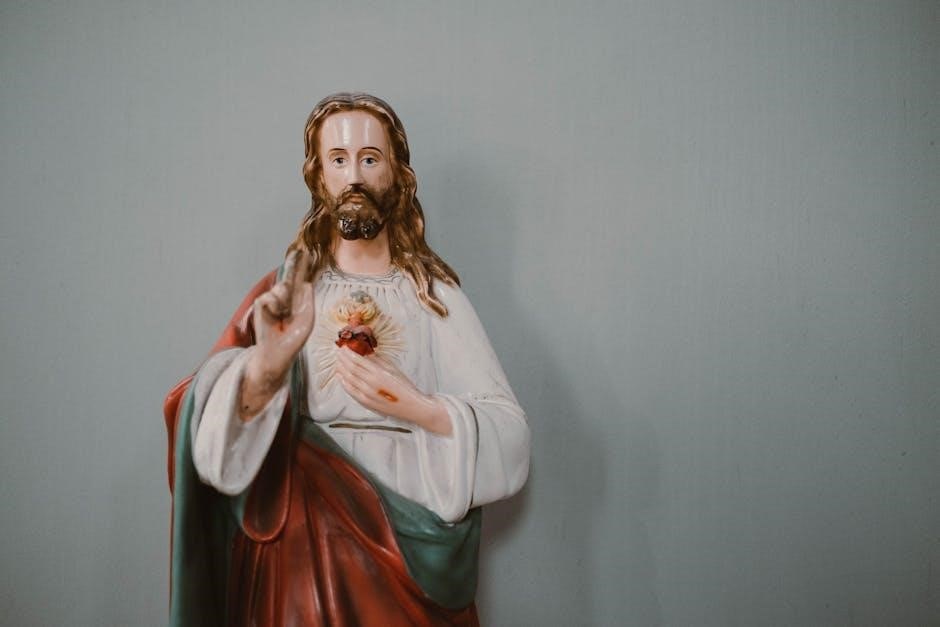
Saint Faustina Kowalska, a humble Polish nun, is central to the Divine Mercy devotion. She meticulously recorded her mystical encounters with Jesus in a diary, detailing the prayers of the Novena and Chaplet, now commonly found as downloadable PDF pamphlets.
Jesus specifically requested Faustina to promote this devotion, emphasizing the importance of trust in His mercy. Her writings became the blueprint for spreading this message, with the PDF pamphlets serving as a practical tool for faithful adherence.
Faustina’s life, marked by suffering and unwavering faith, exemplifies the mercy she was tasked with revealing. The accessibility of the Novena and Chaplet through PDF resources ensures her message continues to reach countless individuals seeking solace and spiritual growth.
The Diary of Saint Faustina: Key Revelations
Saint Faustina’s diary is the foundational source for the Divine Mercy devotion, containing the explicit instructions from Jesus regarding the Novena and Chaplet prayers. These prayers, now widely available as PDF pamphlets, were revealed to her through mystical experiences.
The diary details the specific intentions for each of the nine days of the Novena, providing a structured guide for prayer. The Chaplet’s structure and significance are also meticulously outlined, readily accessible in the convenient PDF format.
These revelations emphasize the boundless mercy of God and the importance of actively seeking and extending it to others. The PDF pamphlets, derived directly from her diary, empower individuals to participate in this transformative devotion, fostering a deeper relationship with Jesus.

The Divine Mercy Novena
Downloadable PDF pamphlets provide the complete nine-day Novena prayers, aligning with intentions revealed to Saint Faustina, for focused spiritual preparation.
What is the Divine Mercy Novena?
The Divine Mercy Novena is a nine-day period of prayer, beginning on Good Friday and concluding on Divine Mercy Sunday, the Sunday following Easter. It’s a powerful preparation for celebrating the infinite mercy of God, as revealed to Saint Faustina Kowalska.
Many readily available PDF pamphlets detail the specific intentions for each of the nine days, guiding the faithful in focused prayer for all of humanity. These pamphlets, often distributed by organizations like the Knights of Columbus, provide the prayers and reflections needed to participate fully.
Each day focuses on a different group – sinners, priests, souls in purgatory, non-believers, doubters, those falling away, the lukewarm, those offending God, and those who’ve rejected Him – inviting God’s mercy upon them. Utilizing a PDF guide ensures consistent and accurate prayer throughout the novena.
When to Begin the Novena: Good Friday
The Divine Mercy Novena traditionally commences on Good Friday, the day Jesus Christ willingly sacrificed Himself for humanity’s salvation. This timing is profoundly significant, linking the novena directly to the culmination of Holy Week and the anticipation of Easter’s joyous resurrection.
Conveniently, many resources offer downloadable PDF pamphlets specifically designed for this timeframe. These pamphlets clearly outline the nine days of prayer, starting with Good Friday’s intention: bringing all mankind, especially sinners, to God’s mercy.
Starting on Good Friday allows for a focused spiritual preparation leading up to Divine Mercy Sunday. Utilizing a PDF version of the novena ensures easy access to the daily prayers and intentions, fostering a deeper connection with God’s boundless compassion throughout this sacred period.
The Nine Days of the Novena: Intentions and Prayers
Each day of the Divine Mercy Novena focuses on a specific intention, guiding prayers towards different groups in need of God’s grace. A readily available PDF pamphlet meticulously details these intentions, ranging from all mankind and sinners to priests, souls in purgatory, and those who doubt or reject faith.
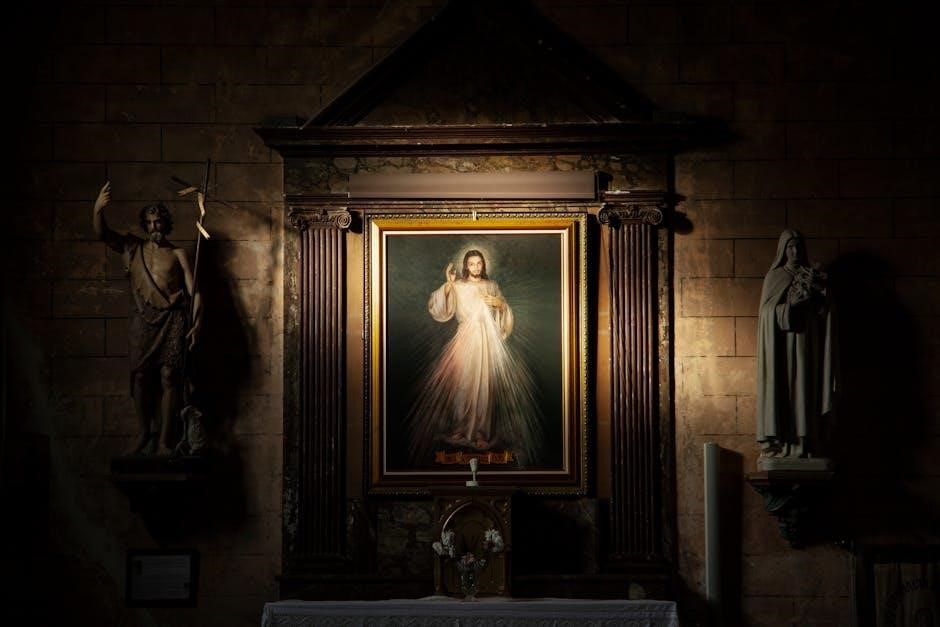
These pamphlets typically present the prescribed prayer for each day alongside the intention, facilitating a structured and meaningful devotional experience. The novena isn’t merely reciting words; it’s a heartfelt plea for mercy directed towards specific needs.
Utilizing a PDF version allows for easy tracking of progress and ensures no intention is overlooked. The culmination of these nine days prepares the heart for the profound celebration of Divine Mercy Sunday.
Day 1: All Mankind, Especially Sinners
The first day of the Divine Mercy Novena, as detailed in readily available PDF pamphlets, directs our prayers towards all of humanity, with a special emphasis on those burdened by sin. Jesus requests we “immerse them in the ocean of my mercy,” offering solace and forgiveness.
These pamphlets often include the specific prayer revealed to Saint Faustina for this intention, encouraging a focused and compassionate appeal to God’s boundless mercy. It’s a call to recognize the universal need for redemption and to intercede for those straying from the path.
Praying with the PDF guide ensures adherence to the intended focus, fostering a deep sense of empathy and a desire for the salvation of all souls, particularly those most in need of divine intervention.
Day 2: Priests and Religious
The second day of the Divine Mercy Novena, as outlined in accessible PDF pamphlets, focuses our prayers on priests and those in religious life. Jesus asks for our supplication for those who administer His sacraments and dedicate their lives to His service.
These pamphlets typically present a specific prayer for this intention, acknowledging the immense responsibility and challenges faced by clergy and religious. It’s a plea for their spiritual strength, perseverance, and fidelity to their vocations.
Utilizing the PDF resource ensures we pray with the precise intention revealed to Saint Faustina, recognizing the vital role priests and religious play in guiding souls towards salvation and embodying Christ’s love.
Day 3: Holy Souls in Purgatory
The third day of the Divine Mercy Novena, conveniently detailed in readily available PDF pamphlets, directs our compassion towards the Holy Souls suffering in Purgatory. Jesus implores us to offer prayers for those who have died in God’s grace but are still being purified.
These pamphlets emphasize that these souls are assured of Heaven, yet require our assistance through prayer and acts of mercy to hasten their release from purification. It’s a powerful reminder of our interconnectedness with those who have gone before us.
Employing the PDF guide ensures we align our intentions with those revealed to Saint Faustina, offering solace and hope to the suffering souls and demonstrating our faith in God’s boundless mercy.
Day 4: Those Who Do Not Believe in God
The fourth day of the Divine Mercy Novena, clearly outlined in accessible PDF pamphlets, focuses on praying for those who do not yet believe in God. Jesus requests our intercession for those lost in disbelief, acknowledging their profound spiritual need.
These pamphlets highlight the importance of extending mercy even to those who reject faith, recognizing that their disbelief often stems from ignorance, pain, or misunderstanding. It’s a call to compassionate prayer, not judgment.
Utilizing the PDF resource ensures we pray with the specific intention revealed to Saint Faustina, seeking God’s grace to open hearts and minds to the truth of His love and mercy, offering them a path to salvation.
Day 5: Those Who Doubt
The fifth day of the Divine Mercy Novena, conveniently detailed within readily available PDF pamphlets, directs our prayers towards those wrestling with doubt; Jesus specifically asks for mercy to be extended to those whose faith is shaken or uncertain.
These pamphlets emphasize that doubt isn’t necessarily a rejection of God, but often a struggle for understanding and a yearning for deeper faith. It’s a plea for strength and clarity for those navigating spiritual uncertainty.

Employing the PDF guide ensures adherence to Saint Faustina’s revelations, allowing us to intercede with focused intention, asking God to illuminate their minds and fortify their faith, leading them to unwavering trust in His divine providence.
Day 6: Those Who are Departing from the Faith
The sixth day of the Divine Mercy Novena, clearly outlined in accessible PDF pamphlets, focuses on those drifting away from their faith. Jesus implores us to offer prayers for those losing their connection with God, facing spiritual apathy, or succumbing to worldly distractions.
These pamphlets highlight the vulnerability of souls tempted to abandon their beliefs, emphasizing the need for compassionate intercession. It’s a plea for God’s grace to rekindle their spiritual fire and draw them back to His loving embrace.
Utilizing the PDF resource ensures faithful adherence to the novena’s intentions, enabling focused prayer for these individuals, seeking God’s intervention to restore their faith and guide them back to a life centered on Him.
Day 7: The Lukewarm
The seventh day of the Divine Mercy Novena, conveniently detailed within readily available PDF pamphlets, directs our prayers towards the lukewarm – those who possess faith but lack fervent devotion. Jesus expresses sorrow for those who neither intensely love nor actively reject Him.
These pamphlets emphasize the spiritual danger of indifference, highlighting the need for a renewed commitment and passionate embrace of God’s love. It’s a call to pray for a stirring of the heart, igniting a deeper relationship with the Divine.
Employing the PDF guide ensures focused intention, allowing us to intercede for these souls, imploring God to awaken their spiritual zeal and inspire a life of genuine faith and fervent love.
Day 8: Those Who Specifically Offend God
The eighth day of the Divine Mercy Novena, clearly outlined in accessible PDF pamphlets, focuses on those who deliberately offend God through sin. This intention acknowledges the gravity of intentional wrongdoing and the need for profound repentance.
These pamphlets emphasize praying for those who consciously reject God’s grace, seeking mercy for their hardened hearts and a return to a path of righteousness. It’s a plea for conversion and forgiveness.
Utilizing the PDF resource provides a structured prayer, enabling focused intercession for these individuals, asking God to soften their hearts and grant them the gift of contrition and a renewed faith.
Day 9: Those Who Have Completely Rejected God
The final day of the Novena, detailed within readily available PDF pamphlets, directs our prayers towards the most challenging case: those who have utterly rejected God and His mercy. This intention acknowledges the profound darkness of complete spiritual alienation.
These pamphlets guide us to implore divine grace for individuals who have closed their hearts entirely to faith, hoping for a miraculous intervention that might spark even a flicker of belief. It’s a prayer against despair.
Using the PDF resource ensures focused intercession, asking God to penetrate even the most hardened hearts, offering a final opportunity for repentance and reconciliation before the celebration of Divine Mercy Sunday.
The Divine Mercy Chaplet
Pamphlets in PDF format provide the complete text for praying the Divine Mercy Chaplet, a powerful devotion central to the Novena’s practice.
What is the Divine Mercy Chaplet?
The Divine Mercy Chaplet is a devotional prayer specifically revealed by Jesus to Saint Faustina Kowalska, a Polish nun, and documented within her diary. It’s a powerful plea for mercy, offered for oneself and for the entire world.
PDF pamphlets containing the Chaplet’s prayers are widely available, often distributed by organizations like the Knights of Columbus to encourage participation in the Novena leading up to Divine Mercy Sunday. These pamphlets provide a structured guide, detailing the specific prayers – the Our Father, Hail Mary, and the unique Divine Mercy prayer – repeated in a specific sequence.
The Chaplet isn’t merely rote recitation; it’s a meditative practice, inviting the faithful to contemplate the Passion of Jesus and to implore God’s boundless mercy. The readily accessible PDF versions ensure anyone can learn and participate in this profound act of faith, fostering a deeper connection with Divine Mercy.
The Structure of the Chaplet: Prayers and Meditations
The Divine Mercy Chaplet follows a distinct structure, easily accessible through PDF pamphlets. It begins with an introductory prayer – the Our Father, Hail Mary, and the Glory Be. Then, the core of the Chaplet consists of ten decades, each comprising one Our Father, ten Hail Marys, and the repeated invocation: “For the sake of His sorrowful Passion, have mercy on us and on the whole world.”

PDF guides often include brief meditations to accompany each decade, prompting reflection on specific aspects of Jesus’ suffering. These pamphlets simplify the process, providing the complete text for convenient prayer.
The Chaplet concludes with a final Glory Be and a concluding prayer, solidifying the plea for mercy. Utilizing a PDF version ensures accurate recitation and facilitates a focused, meditative experience, deepening one’s spiritual connection;
The Significance of the Numbers in the Chaplet
The Divine Mercy Chaplet’s numerical structure holds profound spiritual significance, often detailed within PDF pamphlets. The ten decades mirror the ten commandments, representing a plea for forgiveness regarding transgressions against God’s law. The repetition of the invocation – “For the sake of His sorrowful Passion, have mercy on us and on the whole world” – emphasizes the boundless nature of divine mercy.
PDF resources explain that the number ten symbolizes completeness and God’s perfect law. The consistent recitation, guided by the pamphlet, aims to encompass all humanity within its plea for redemption.
Furthermore, the Chaplet’s structure, readily available in PDF format, reflects the rhythm of prayer and fosters a meditative state, allowing for deeper contemplation of God’s merciful love.
How to Pray the Chaplet Effectively
To pray the Divine Mercy Chaplet effectively, utilizing a PDF pamphlet as a guide is highly recommended. Begin with the opening prayers detailed within, followed by reciting the “Our Father” and “Hail Mary” on each of the ten decades. Focus intently on the invocation: “For the sake of His sorrowful Passion, have mercy on us and on the whole world.”
PDF resources emphasize the importance of heartfelt sincerity and humility during recitation. Visualize Christ’s suffering and offer your prayers with genuine contrition.
Consistent practice, aided by the structured format of the PDF pamphlet, deepens one’s connection to divine mercy. Praying with a group, using the pamphlet, amplifies the collective power of the devotion, fostering spiritual growth.

Divine Mercy Sunday
PDF pamphlets detail how Divine Mercy Sunday, following the Novena, is a celebration of God’s boundless love and forgiveness for all humanity.
These guides highlight the importance of trust in Jesus and receiving His mercy through confession and adoration.
The Importance of Divine Mercy Sunday
Divine Mercy Sunday, established by Pope John Paul II in 2000, holds immense spiritual significance, as revealed to Saint Faustina. PDF pamphlets dedicated to the Novena and Chaplet emphasize that this Sunday is a special time to receive God’s extraordinary grace.
These resources explain that Jesus promised complete forgiveness of sins and remission of punishment to those who, after a good confession, receive Holy Communion on this day with a trusting heart.
The pamphlets often detail how observing this day is a powerful act of faith, demonstrating reliance on Christ’s mercy. They encourage participation in parish celebrations and devotion to the Divine Mercy image, fostering a deeper connection with God’s love and compassion. PDF versions make these teachings accessible to all.
Pope John Paul II and Divine Mercy Sunday
Pope John Paul II’s profound devotion to Divine Mercy culminated in his establishing the Sunday following Easter as Divine Mercy Sunday in the Jubilee Year 2000. PDF pamphlets detailing the Novena and Chaplet frequently highlight his pivotal role.
His canonization of Saint Faustina on that day underscored the importance of her revelations and the message of God’s boundless mercy. These pamphlets often include quotes from his homilies, emphasizing the urgency of embracing this divine gift.
John Paul II saw the promotion of Divine Mercy as a crucial mission for the Church, particularly in a world often marked by suffering and indifference. PDF resources serve as a testament to his legacy, spreading awareness and facilitating devotion to this powerful aspect of faith.
Practices for Divine Mercy Sunday
Central to observing Divine Mercy Sunday is receiving the Sacrament of Reconciliation (Confession) with a sincere heart. PDF pamphlets detailing the Novena and Chaplet often emphasize this preparation.
Venerating the Image of The Divine Mercy, and publicly proclaiming the message of mercy, are also key practices. Many PDF guides include the image for personal devotion and prayerful contemplation.
Attending Mass and offering a special prayer for mercy, particularly the Chaplet of The Divine Mercy, are highly encouraged. PDF resources provide the complete text of the Chaplet, enabling faithful participation. Furthermore, acts of charity and forgiveness towards others embody the spirit of this holy day, as outlined in available pamphlets.
Confession and Divine Mercy Sunday
The profound connection between Confession and Divine Mercy Sunday is consistently highlighted within Divine Mercy Novena and Chaplet PDF pamphlets. Jesus explicitly requested that souls prepare for this feast by receiving the Sacrament of Reconciliation.
These pamphlets often detail the importance of approaching the confessional with a contrite heart, seeking God’s forgiveness for all sins. Confession is presented not merely as a requirement, but as an essential step towards experiencing the fullness of God’s mercy.
Many PDF guides include examination of conscience prompts, aiding in thorough preparation. Receiving absolution on Divine Mercy Sunday is believed to grant a special grace, a complete remission of sins and punishment, as revealed to Saint Faustina.

Resources and Further Information
Numerous websites and organizations, like the Knights of Columbus, provide a Divine Mercy Novena and Chaplet pamphlet in convenient PDF format.
These downloadable resources facilitate easy access to prayers and intentions for personal or group devotion during the novena preparation.
Divine Mercy Novena and Chaplet Pamphlet PDF Availability
Finding a Divine Mercy Novena and Chaplet pamphlet in PDF format is remarkably easy, thanks to the widespread devotion and numerous Catholic organizations dedicated to promoting this powerful practice. The Knights of Columbus, for instance, frequently offers downloadable PDF versions on their website, specifically designed for preparation leading up to Divine Mercy Sunday.
Many parish websites also provide these pamphlets as a resource for their congregations, allowing individuals and families to participate fully in the nine-day novena. A simple online search for “Divine Mercy Novena PDF” yields a plethora of options, ensuring accessibility for all. These PDFs typically include the prayers for each day of the novena, alongside the Divine Mercy Chaplet, making it a comprehensive guide for personal or communal prayer.
Downloading and printing these pamphlets allows for convenient use during prayer, fostering a deeper connection with the merciful love of Jesus Christ.
Online Resources for Divine Mercy Prayers
Numerous websites offer convenient access to Divine Mercy prayers, including the Novena and Chaplet, beyond simply PDF downloads. The official website for Divine Mercy, theMarian.org, provides the complete text of both prayers, along with audio recordings for those who prefer to listen and pray along.
EWTN also features a dedicated section for Divine Mercy resources, offering both the Novena and Chaplet prayers in multiple formats. Various Catholic apps, available for smartphones and tablets, incorporate these prayers, allowing for prayer on the go.
These online resources often include explanations of the significance of the prayers and the devotion itself, enriching the prayer experience. YouTube channels dedicated to Catholic prayer also host recordings of the Chaplet, providing a visual and auditory aid for those unfamiliar with the practice.
Books on Divine Mercy and Saint Faustina
Beyond readily available pamphlets and PDFs, a wealth of literature delves deeper into the Divine Mercy devotion and the life of Saint Faustina Kowalska. Her Diary: Divine Mercy in My Soul is the foundational text, detailing her mystical experiences and the revelations she received from Jesus.
Numerous commentaries and study guides accompany the Diary, aiding readers in understanding its profound spiritual insights. Books exploring the historical context of the devotion, such as those detailing the life of Pope John Paul II and his promotion of Divine Mercy, are also available.
Several publications specifically focus on the Divine Mercy Novena and Chaplet, offering expanded reflections and prayers. These resources provide a more comprehensive understanding of the devotion’s roots and its significance within the Catholic faith, enriching personal prayer life.
The Knights of Columbus and Divine Mercy Promotion
The Knights of Columbus have enthusiastically embraced the Divine Mercy devotion, actively promoting it within their councils and communities. A key component of this promotion is the widespread distribution of Divine Mercy Novena and Chaplet pamphlets, often available in PDF format for easy access and sharing.
Councils frequently encourage families to pray the Novena together, beginning on Good Friday, in preparation for Divine Mercy Sunday. They often provide printed pamphlets or links to downloadable PDF versions to facilitate this practice.
This commitment reflects the Order’s dedication to fostering spiritual growth and deepening faith among its members and the wider Catholic community, making the message of Divine Mercy accessible to all.